
Greek Yogurt with Honey and Walnuts, and Ten Other Ways Greeks Actually Eat It

Yiaourti me meli (γιαούρτι με μέλι) is served in every Greek taverna and most Greek kitchens. It is also the oldest documented way of eating yogurt in Greece: the physician Galen, writing in the second century, describes Greeks eating oxygala, a soured milk, with honey. The dish is simple enough that quality is everything, and this guide is mostly about choosing well.
The classic
Serves 2
300 g strained Greek yogurt, 5% or 10% fat, cold
2 tablespoons Greek honey (thyme honey for a strong floral note, pine or fir honey for a darker, resinous one)
40 g walnut halves
Optional: a pinch of ground cinnamon
Toast the walnuts. Spread them in a dry pan over medium heat for 3–4 minutes, shaking, until fragrant, or 8 minutes at 170 °C in the oven. Cool, then break roughly by hand.
Spoon the yogurt into two shallow bowls. Do not stir it smooth; the dense, slightly uneven texture is part of the dish.
Drizzle the honey generously in a spiral. If it is crystallised, warm the jar in hot water for a few minutes.
Scatter the walnuts and, if you like, dust with cinnamon.
That is the whole recipe. Thirty seconds, three ingredients.
Choosing the three ingredients
Yogurt
Use strained yogurt at 5% or higher. At 0% the dish is austere; at 10% or with sheep's milk yogurt it is a dessert. Traditional set yogurt with skin (paradosiako) is also classic, especially in villages. "Greek-style" thickened yogurt gives a gluey result and sweats liquid under the honey.
Honey
Greek honey varieties differ sharply:
Thyme honey (Crete, Kythira, the Cyclades): intensely aromatic, slightly herbal, light amber. The classic partner for yogurt.
Pine honey (Thasos, Evia, Halkidiki): dark, less sweet, mineral, slow to crystallise. About 65% of Greek production.
Fir honey (Vytina, Mainalo; "vanilla" fir honey has a protected designation): pale, thick, delicate.
Orange blossom (Peloponnese): floral and sweet, good with 0% yogurt.
Heather, chestnut, wildflower: regional choices.
Raw or lightly filtered honey is the norm in Greece; it will crystallise, which is a sign of authenticity, not spoilage.
Walnuts
Fresh and toasted. Rancid walnuts are the commonest fault in the dish; buy small quantities, keep them in the fridge or freezer, and taste one before serving. Almonds, pistachios (Aegina) and pine nuts are regional substitutes.
Ten other ways Greeks eat yogurt
*With spoon sweets (glyka tou koutaliou). Whole fruit preserved in syrup: sour cherry (vissino*), quince, bergamot, fig, walnut, rose petal. A spoonful on cold yogurt is a summer dessert across the country.
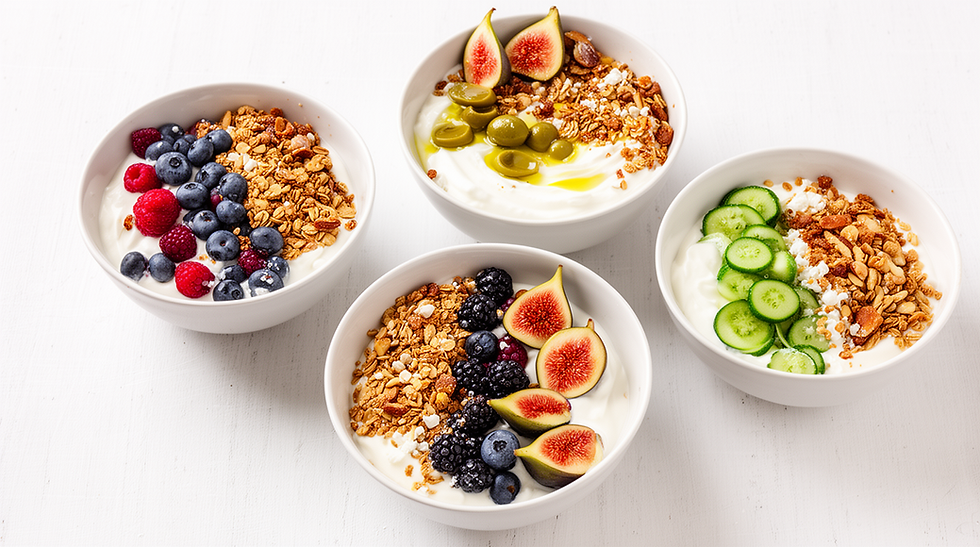
With fruit and honey at breakfast. Figs in late summer, grapes in autumn, oranges in winter, strawberries and apricots in spring.
*With petimezi.* Grape-must syrup, darker and less sweet than honey; traditional in Crete and the Peloponnese.
With tahini and honey. A northern Greek and Cypriot breakfast; sesame paste swirled into yogurt with honey.
*With koulouri or paximadi.* Yogurt as the soft element next to a sesame bread ring or a twice-baked barley rusk, often with tomato and olive oil for a savoury breakfast.
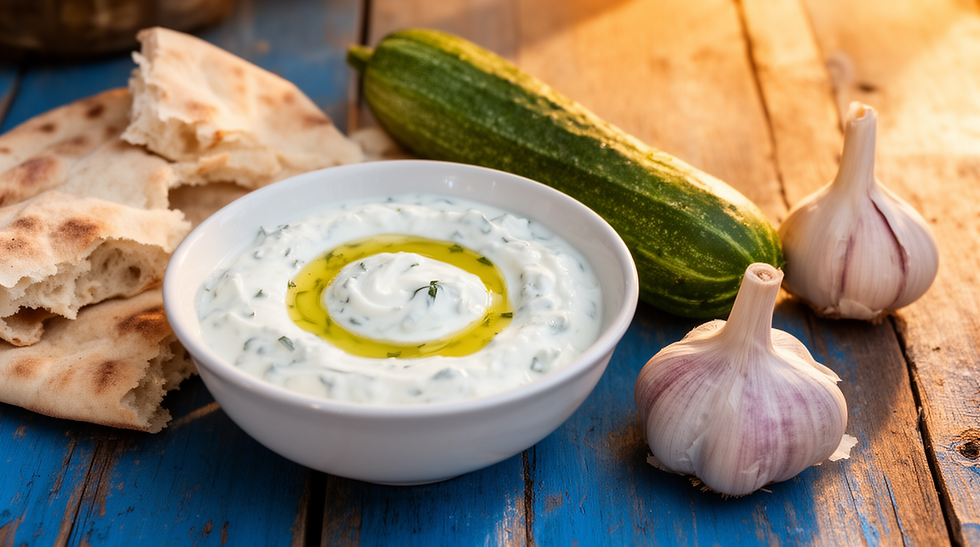
Tzatziki. The garlic-cucumber dip; see Authentic tzatziki.
On fried vegetables. Courgette and aubergine fritters, fried potatoes, stuffed peppers all come with a spoon of plain yogurt on the side.
*In yiaourtlou.* Thessaloniki's Anatolian-influenced kebab served on pita with a warm yogurt sauce and spiced tomato.
In baking. Yogurt cake (yiaourtopita), yogurt in bread and pie dough, yogurt-based cheesecake (cheesecake me yiaourti) and in the batter for loukoumades and tiganites. See Cooking and baking with Greek yogurt.
Frozen. Greek frozen yogurt (pagoto yiaourti) has become a standard flavour in Greek ice-cream parlours, usually with honey or sour cherry.
As a remedy. Plain cold yogurt for sunburn and, culturally if not medically, for an upset stomach; see Greek yogurt for skin and hair for the evidence.
Nutrition (per serving of the classic, approximate)
About 320 kcal with 5% yogurt: 15 g protein, 17 g fat, 27 g carbohydrate (of which about 20 g sugars, mostly from the honey). With 0% yogurt: about 260 kcal and 17 g protein. Honey is sugar; two tablespoons is a dessert portion, not a health food.
Buying note
The combination is sold ready-made as "split cups" (yogurt with a honey compartment) by most Greek producers and by Chobani and others abroad. They are convenient but expensive per gram of honey, and the honey is often blended. A tub of plain yogurt and a jar of single-origin Greek honey is cheaper and better. Products are listed in the product directory.
Recipe notes and safety. Quantities are guidelines; adjust to taste. Contains milk and tree nuts. Do not give honey to infants under 12 months because of the risk of infant botulism. Keep yogurt refrigerated at or below 4 °C and serve cold. Nutrition figures are estimates and not a substitute for a label or professional advice.
Sources
Wikipedia, Yogurt (Galen on oxygala with honey; history): en.wikipedia.org
Greek News Agenda, Greek yogurt traditions: greeknewsagenda.gr
Enterprise Greece, Greek yogurt profile: enterprisegreece.gov.gr
USDA FoodData Central, Greek yogurt whole milk (FDC 2259794) and nonfat (FDC 330137), basis for nutrition estimates: whole milk, nonfat
US CDC, infant botulism and honey: cdc.gov

Comments