
Cooking and Baking with Greek Yogurt: Substitutions, Marinades, Sauces and the Rules for Heat

Strained yogurt behaves in the kitchen like a cross between sour cream and fresh cheese: thick enough to hold shape, acidic enough to tenderise and leaven, and high enough in protein to curdle if you boil it. Learn those three properties and it replaces half a dozen dairy products.
Substitution chart
Replace | With Greek yogurt | Notes |
Sour cream | 1:1 | Closest match; 5% yogurt for richness, 2% for lighter |
Crème fraîche | 1:1 in cold uses; temper for hot | Crème fraîche tolerates boiling, yogurt does not |
Mayonnaise (in dips, slaws, potato salad) | 1:1, or half and half | Add a little olive oil and mustard for body |
Heavy cream (in cold sauces, dressings) | 1:1 thinned with milk | Not for whipping or reducing |
Buttermilk (in pancakes, soda bread, marinades) | ¾ cup yogurt + ¼ cup milk per cup | Same acidity; activates bicarbonate |
Butter or oil in cakes and muffins | Replace up to half the fat with ¾ the amount of yogurt | Keeps crumb moist; do not replace all |
Eggs (in some quick breads) | ¼ cup yogurt per egg | Only for binding, not for structure |
Ricotta (in fillings) | 1:1 strained extra 2 hours | Drier yogurt gives a closer texture |
Cream cheese (in frostings, cheesecake) | Strain 12–24 h to labneh thickness | Adds tang; sweeten accordingly |
The rule for heat
Yogurt curdles when its casein proteins tighten under heat and acid, squeezing out whey. Three ways to prevent it:
Add it off the heat. Stir yogurt into a sauce, soup or curry after the pan comes off the flame, as the final step.
Temper it. Whisk a ladle of the hot liquid into the yogurt, then stir the warmed yogurt back into the pot over low heat without boiling.
Stabilise it. For dishes that must simmer with yogurt (some Anatolian and Persian stews), whisk 1 teaspoon of cornflour or a beaten egg white into each 250 g of yogurt before adding, and keep the heat gentle.
Full-fat strained yogurt is the most forgiving; 0% splits most easily. Greek-style thickened yogurts behave unpredictably because starches and gums gel on heating.
Marinades
Yogurt marinades tenderise differently from citrus or vinegar marinades. Lactic acid is milder, so it works on the surface proteins without turning them mushy, and the calcium in yogurt appears to activate enzymes in the meat that break down muscle fibre. The thick coating also clings, protects from direct heat and browns well. Chicken, lamb and pork all respond; 4–12 hours is the useful window, longer for lamb.
A basic Greek marinade for 1 kg chicken thighs: 200 g Greek yogurt, 3 tablespoons olive oil, juice of half a lemon, 3 crushed garlic cloves, 1 tablespoon dried oregano, 1 teaspoon salt, ½ teaspoon pepper, 1 teaspoon sweet paprika. Scrape off the excess before grilling or roasting at high heat.
Cold sauces and dressings
Garlic-lemon yogurt sauce: yogurt, crushed garlic, lemon juice, olive oil, salt. For grilled vegetables, fish and pita.
Herb sauce: yogurt blended with parsley, dill, mint, spring onion, lemon and olive oil.
Tahini-yogurt: 3 parts yogurt to 1 part tahini, lemon, garlic, water to loosen. For roasted cauliflower and falafel.
Dressing: 2 parts yogurt, 1 part olive oil, 1 part lemon or vinegar, mustard, salt; thin with water.
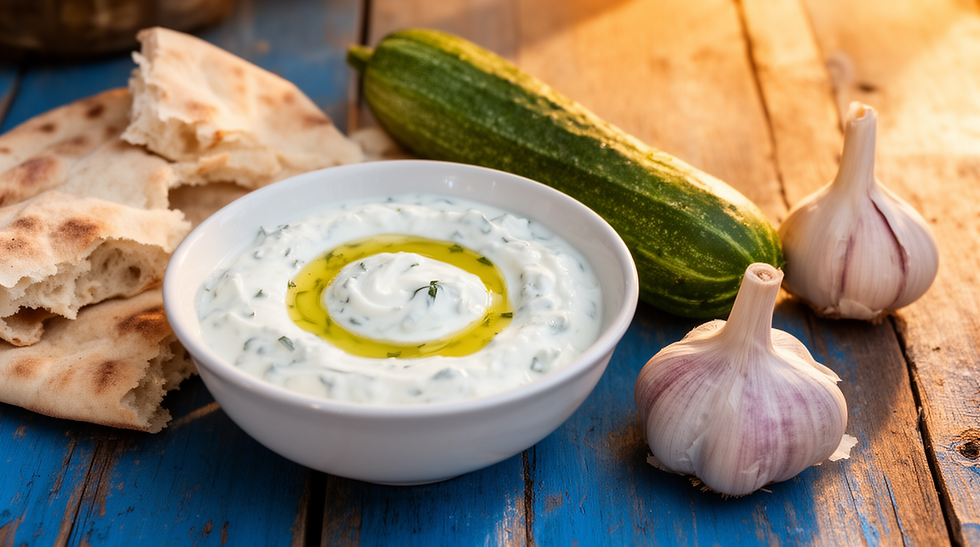
Tzatziki has its own page: Authentic tzatziki.
Soups
Yogurt is the base of cold summer soups across the Balkans and Anatolia (cucumber, dill, walnut, garlic) and a finishing swirl for hot lentil, pumpkin or beetroot soups. For the hot ones, add it at the table.
Baking
Acidity plus thickness makes Greek yogurt a natural in baking. It reacts with bicarbonate of soda to leaven, keeps cakes moist because its proteins hold water, and its tang balances sweetness.
Yiaourtopita (Greek yogurt cake)
A loaf-tin cake found in every Greek baking book. Serves 10.
250 g Greek yogurt (2% or 5%)
3 eggs
200 g sugar
100 ml light olive oil or sunflower oil
Zest of 1 lemon or orange
1 teaspoon vanilla
250 g plain flour
2 teaspoons baking powder
½ teaspoon bicarbonate of soda
Pinch of salt
Heat the oven to 175 °C. Line a 25 cm loaf tin or 22 cm round tin.
Whisk eggs and sugar until pale, 2–3 minutes. Whisk in oil, yogurt, zest and vanilla.
Sift flour, baking powder, bicarbonate and salt over the bowl; fold until just combined.
Bake 45–55 minutes until a skewer comes out clean. Cool 10 minutes in the tin.
Optional syrup: boil 100 g sugar with 100 ml water and a strip of lemon peel for 3 minutes; pour over the warm cake.
Other baking uses
Pancakes and waffles: replace buttermilk as above.
Scones and soda bread: yogurt thinned with milk.
Pie and pastry dough: 2–3 tablespoons of yogurt per 250 g flour gives a tender, slightly flaky crust (traditional in Greek pita doughs).
Cheesecake: labneh-thick strained yogurt replaces part or all of the cream cheese; expect a lighter, tangier result and a slightly longer set.
Frosting: very thick strained yogurt beaten with icing sugar and vanilla, for carrot cake and banana bread.
Savoury dishes where yogurt is the point
Yiaourtlou kebab (Thessaloniki): grilled kebab on pita with warm yogurt and spiced tomato sauce.
Chicken with yogurt (kotopoulo me yiaourti): chicken baked under a yogurt, egg and cheese topping.
Manti and Turkish-style dumplings with garlic yogurt and chilli butter.
Lamb in yogurt (Epirus and Macedonia): slow-baked with a stabilised yogurt sauce.
Vegetable fritters of every kind, served with a spoon of plain yogurt.
Storage and leftovers
Dishes made with yogurt keep 2–3 days refrigerated. Yogurt-based sauces and dips do not freeze well; the texture breaks. Baked goods made with yogurt freeze normally.
Nutrition logic
Using 5% Greek yogurt instead of sour cream roughly halves the fat and triples the protein of a dip; replacing half the butter in a cake with yogurt cuts fat by about a third while adding a little protein. It does not make a cake a health food. For the numbers see Greek yogurt nutrition facts.
Recipe notes and safety. Quantities are guidelines; adjust to taste. Recipes contain milk, eggs, gluten and, in some variations, sesame or tree nuts. Marinate meat in the refrigerator, never at room temperature, and discard used marinade or boil it thoroughly before using as a sauce. Keep yogurt-based dishes refrigerated at or below 4 °C and eat within 2–3 days. Nutrition figures are estimates and not a substitute for a label or professional advice.
Sources
Greek Food and Beverages Code, Article 82 (strained yogurt composition): aade.gr (PDF)
USDA FoodData Central, Greek yogurt whole milk (FDC 2259794) and nonfat (FDC 330137): whole milk, nonfat
US FDA, safe food storage and marinating guidance: fda.gov
Wikipedia, Yogurt (culinary uses by region): en.wikipedia.org

Comments