
Greek Yogurt vs Regular Yogurt: Nutrition, Texture, Price and When to Use Each

Updated: 1 day ago
The only difference between Greek yogurt and regular yogurt is that Greek yogurt has had whey drained out of it. Everything else, from the protein count to the price tag, follows from that. This guide lays the two side by side so you can pick the right one for the job rather than the one with the louder label.
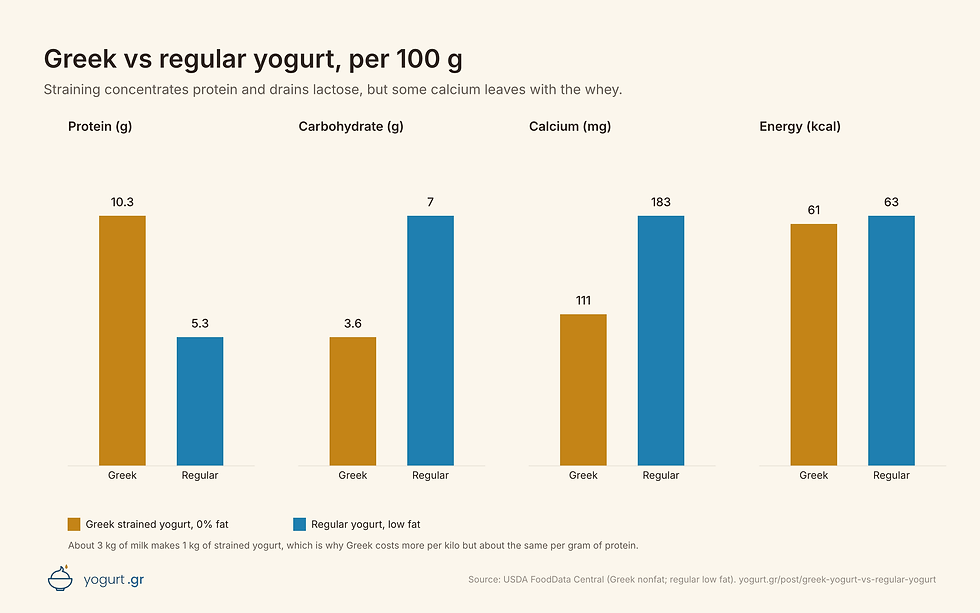
Nutrition per 100 g
Values are from USDA FoodData Central (April 2026 release). Commercial products differ, especially flavoured ones, so always check the label.
Greek, nonfat | Greek, whole milk | Regular, low fat | Regular, whole milk | |
Energy | 61 kcal | 95 kcal | 63 kcal | 77 kcal |
Protein | 10.3 g | 8.8 g | 5.3 g | 3.8 g |
Fat | 0.4 g | 4.4 g | 1.6 g | 4.5 g |
Carbohydrate | 3.6 g | 4.8 g | 7.0 g | 5.6 g |
Lactose | 2.6 g | 2.6 g | n/a | 3.4 g |
Calcium | 111 mg | 111 mg | 183 mg | 127 mg |
Protein
Straining concentrates casein. Greek yogurt typically delivers twice the protein of regular yogurt at the same fat level. For a 170 g cup, that is roughly 15–17 g against 7–9 g. If protein is the reason you eat yogurt, Greek wins outright.
Sugar and lactose
The sugar in plain yogurt is lactose, and lactose is dissolved in the whey. Draining removes a share of it, which is why plain Greek yogurt shows 3.6–4.8 g carbohydrate per 100 g against 5.6–7.0 g for regular. The difference matters more for carbohydrate counting than for taste; both are tart when plain.
Calcium
This is the one nutrient where regular yogurt is ahead. Calcium is partly in the whey, so Greek yogurt carries somewhat less per 100 g (about 110 mg versus 125–185 mg). Per gram of protein, regular yogurt is the better calcium source; per cup, both contribute meaningfully to the 1,000 mg adult reference intake.
Calories
At equal fat level the calories are similar. The gap people notice comes from comparing a 0% Greek yogurt with a whole-milk regular yogurt, or from flavoured products with added sugar, which can add 8–15 g of sugar per 100 g to either type.
Texture and taste
Greek yogurt is dense enough to hold a spoon upright and has a pronounced tang because acids are concentrated along with the solids. Regular yogurt is softer, more pourable and milder. Neither is inherently sweeter; sweetness comes from what is added.
Price
Making one kilogram of strained yogurt uses roughly three kilograms of milk, so Greek yogurt costs more per kilo. Per gram of protein, however, the gap narrows or disappears. If you are buying yogurt as a protein source, compare the price per 10 g of protein rather than per kilo.
Cooking behaviour
Heat. Authentic strained yogurt tolerates gentle heat better than regular yogurt because it has less free water, but any yogurt can split if boiled. Temper it with a spoon of the hot liquid first, or stir it in off the heat.
Baking. Greek yogurt can replace sour cream one-for-one and replace part of the butter or oil in cakes and muffins. Regular yogurt is thinner; reduce other liquids if you substitute it.
Sauces and dips. Tzatziki, raita and herb dips need the body of strained yogurt. Regular yogurt makes them watery unless you drain it yourself.
Marinades. Both work. Lactic acid and calcium tenderise meat gently; regular yogurt coats more thinly.
Dressings and smoothies. Regular yogurt's looser texture is an advantage here.
Which one, for what
Goal | Better choice | Why |
More protein per serving | Greek | About double |
Lower lactose | Greek | Whey (and lactose) drained off |
Maximum calcium per calorie | Regular low fat | Minerals stay in the whey |
Thick dips, tzatziki, sauces | Greek | Body and stability |
Smoothies, dressings, drinks | Regular | Pours and blends easily |
Baking substitute for sour cream | Greek | Matches thickness |
Tight budget per kilo | Regular | Less milk per kilo |
Tight budget per gram of protein | Roughly even | Check unit prices |
The "Greek-style" trap
Some yogurts labelled "Greek" or "Greek-style" are regular yogurt thickened with milk protein concentrate, pectin, starch or gelatin. They sit in between on protein and behave like regular yogurt in the pan. If the ingredient list has more than milk and cultures, or protein is under 7 g per 100 g, treat it as regular yogurt. See Authentic Greek yogurt vs Greek-style.
Bottom line
Greek yogurt is a protein-dense, lower-lactose, thicker version of the same food. Regular yogurt is cheaper, higher in calcium per calorie and better where you want it to pour. Most kitchens are better off with both. For what the research says about health outcomes, read Is Greek yogurt good for you?; for the full nutrition breakdown by fat level, see Greek yogurt nutrition facts.
Disclaimer. This article is general information, not medical or dietary advice. Nutrition values are typical figures from the cited databases and vary by brand and batch; always read the label. Talk to a doctor or registered dietitian before changing your diet if you have a medical condition, take medication, are pregnant or breastfeeding, or manage an allergy or intolerance.
Sources
USDA FoodData Central: Greek nonfat (FDC 330137), Greek whole milk (FDC 2259794), plain whole milk (FDC 2259793), plain low fat (FDC 170886)
Dairy (MDPI) 2025, 6, 21 — milk-to-yogurt yield and acid whey composition: mdpi-res.com (PDF)
Cook's Illustrated, full-fat Greek yogurt taste test (strained vs thickened protein): cooksillustrated.com
Greek Food and Beverages Code, Article 82: aade.gr (PDF)



Comments